About Us Weight Loss TRT Women's HRT Peptide Therapy
Rejuvenation
IV Therapy Laser Hair Removal Tixel Sculpt
Book Consultation
Inquire Call
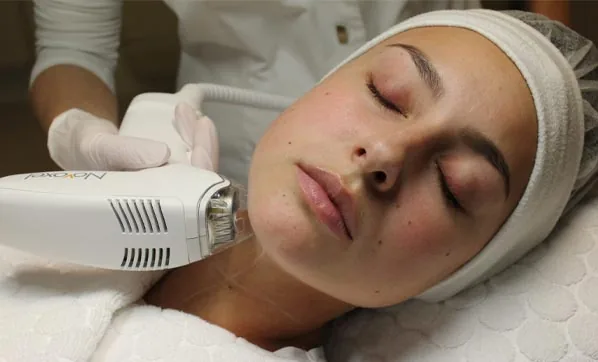
Sentient Tixel skin resurfacing — clinical aesthetic treatment

Rejuvenation

Skin Resurfacing

Clinical Skin Resurfacing, Grounded in Evidence

The Sentient Tixel device uses FDA-cleared Thermal-Mechanical Action technology to resurface skin without lasers, radiation, or needles — delivered by our clinical team in Joplin, with protocols calibrated to your skin type, concerns, and recovery window.

FDA-Cleared·All Fitzpatrick Skin Types·Clinician-Supervised

In-clinic only · Joplin, MO · Call (417) 707-1150 to inquire

Scroll
How It Works

Not a Laser. Not Radiofrequency. Something New.

Most skin resurfacing devices work by one of two mechanisms — lasers that deliver light energy into tissue, or radiofrequency that heats the dermis through electrical current. Both have trade-offs: lasers can be unsafe for darker skin tones and often require 1–3 months of visible redness; radiofrequency results are gradual and subtler. Tixel uses a third approach — Thermal-Mechanical Action — that removes most of those trade-offs.

How It Works

The Titanium Tip

A medical-grade titanium tip containing 81 micro-pyramid points is heated to approximately 400°C, then briefly touched to the skin for 8–16 milliseconds per pulse. That ultra-brief thermal transfer creates controlled micro-channels in the top skin layers, triggering the body's natural collagen remodeling response without damaging deeper tissue.

Why It's Safer

Safe for More Skin Tones

Because Tixel uses direct heat — not light — it doesn't emit radiation and carries no risk of the pigmentation complications that make traditional ablative lasers unsuitable for medium to darker skin tones. It's FDA-cleared across the full Fitzpatrick skin type range (I–VI).

Why Recovery Is Different

Days, Not Weeks

Conventional ablative lasers can leave patients with weeks of redness, swelling, and social downtime. With Tixel, most patients experience pinkness and a fine "sandpaper" texture for 24–72 hours, depending on treatment intensity. Many return to work the next day.

Clinical Applications

What Tixel Can Address

Tixel is used clinically for a wide range of skin concerns, adapted through three treatment intensity modes that our clinical team calibrates to your skin and goals.

Skin Concerns We Address

  • Fine lines and wrinkles
  • Skin texture and tone irregularities
  • Periorbital (eye area) aging — including under-eye laxity and crepiness
  • Acne scarring and post-acne marks
  • Enlarged pores
  • Sun damage, age spots, and uneven pigmentation
  • Stretch marks
  • Melasma (where laser options are limited)
  • General facial, neck, and décolletage rejuvenation

Three Treatment Intensities

Light Intensity

Surface-level prep & absorption

Opens temporary micro-channels in the top skin layer, often combined with topical serums to enhance absorption. Minimal downtime, gentler approach, good for maintenance.

Medium Intensity

The most common clinical setting

Drives collagen remodeling for tightening, texture, and tone. Typical recovery 1–3 days.

High Intensity

Comparable to fractional CO2 outcomes

Comparable to fractional CO2 laser outcomes in a single session. Reserved for specific indications; recovery may extend to 5–7 days. Used selectively based on candidacy assessment.

Your Experience

How a Tixel Program Works

1
Phone Inquiry

A brief conversation with our team about your concerns, goals, and medical history. If Tixel sounds like a fit, we'll schedule your in-clinic skin evaluation.

2
In-Clinic Skin Evaluation

A clinician reviews your medical history, examines your skin, identifies your Fitzpatrick skin type, screens for contraindications, and designs a treatment protocol. You'll receive a written treatment plan and transparent pricing at this visit.

3
Treatment Sessions

Sessions are typically brief — 15 to 45 minutes depending on the area and intensity. Topical numbing is available for patient comfort. You'll receive written pre- and post-care instructions. Most patients schedule sessions 4 to 6 weeks apart.

4
Maintenance

After your initial series (typically 3 sessions for skin rejuvenation, more for scar or pigmentation work), we recommend 1 to 2 maintenance treatments per year to preserve results.

Who It's For

Is Tixel Right for You?

Tixel is a versatile device, but it's not for everyone. A clinical skin evaluation determines candidacy — the summary below is a starting point, not a substitute.

Good Candidates

People who:
  • Want meaningful skin improvement without weeks of visible downtime
  • Have been told their skin tone isn't suitable for laser resurfacing
  • Are interested in treatment around the eyes or on delicate areas
  • Prefer a non-laser, non-needle approach
  • Can commit to a treatment series (typically 3 sessions, 4–6 weeks apart)
  • Are willing to strictly avoid sun exposure for 4 weeks before and after treatment

Not Appropriate If:

Tixel is not for you if you:
  • Have tanned or plan to tan within 4 weeks of treatment
  • Are pregnant or breastfeeding
  • Have an active herpes simplex outbreak in the treatment area
  • Have a history of keloid scarring or impaired wound healing
  • Have used oral isotretinoin (Accutane) within the past 3 months
  • Take anticoagulants or have a bleeding disorder
  • Have skin cancer, active infection, or significant sun damage in the treatment area
  • Have tattoos or permanent makeup in the treatment area

A full contraindication review is part of every skin evaluation.

How Tixel Compares

Tixel vs. Other Skin Resurfacing Options

Tixel (TMA) Fractional CO2 Laser Microneedling RF
Energy source Direct heat (titanium tip) Laser light Radiofrequency + needles
All skin types safe Yes (Fitzpatrick I–VI) Limited (risk for IV–VI) Yes
Safe near eyes Yes (no eye shields needed) Requires ocular shields Limited
Typical downtime 1–3 days 7–14+ days 2–5 days
Collagen remodeling Yes Yes Yes
Penetrates deeper tissue Controlled surface effect Deep ablation Deep (via needles)
Needles required No No ✓ Yes
Anesthetic required Topical numbing optional Often required Topical numbing typical
Common Questions

What People Ask About Tixel

What is Sentient Tixel?

Sentient Tixel is an FDA-cleared skin resurfacing device that uses Thermal-Mechanical Action (TMA) technology. A medical-grade titanium tip briefly transfers controlled heat to the skin, creating micro-channels that stimulate collagen production. Unlike lasers, Tixel emits no radiation and requires no ocular shields. It's cleared for all Fitzpatrick skin types and separately approved for periorbital (eye-area) treatment.

How is Tixel different from a laser?

Tixel uses direct thermal contact, not laser light. That distinction matters for three reasons. First, Tixel is safe across the full range of skin tones, while many ablative lasers are contraindicated for Fitzpatrick skin types IV–VI due to pigmentation risk. Second, no light emission means no retinal exposure risk, so Tixel can be used around the eyes without metal ocular shields. Third, Tixel recovery is typically measured in days rather than weeks.

Is Tixel safe for darker skin tones?

Yes. Tixel is FDA-cleared for all Fitzpatrick skin types (I through VI). Because it doesn't use laser light, it avoids the pigmentation complications that limit traditional ablative laser use in medium and darker skin tones. Your clinical team will still review your history and skin thoroughly at your evaluation.

What does recovery look like?

The day of treatment, patients describe a sensation similar to a moderate sunburn that subsides within several hours. Over the next 24–72 hours, expect pinkness, mild swelling (particularly around the eyes if that area was treated), and a fine sandpaper texture as micro-channels heal. Most patients resume work and social activities within 1–3 days, depending on treatment intensity. Makeup is typically cleared for use the following day.

How many sessions are typical?

For general skin rejuvenation, patients typically receive three sessions spaced four to six weeks apart, followed by one or two maintenance treatments per year. More intensive concerns — such as acne scarring or stretch marks — may require additional sessions. Your specific protocol is determined at your clinical skin evaluation. Results may vary.

Last reviewed by Mathew Hammons, PA-C — April 2026 · Clinical oversight for all Tixel procedures
More Questions

Still Have Questions?

Start the Conversation

Begin With a Phone Inquiry

Every Tixel program begins with a phone inquiry, followed by an in-clinic skin evaluation where we determine your candidacy, discuss your goals, and quote pricing in writing. There's no commitment to schedule a call.

In-clinic at 2727 E 32nd St STE 9, Joplin MO 64804 · Cash-pay · HSA/FSA accepted where eligible